A Ten-Minute Daily Thumbnail Routine
Why ten minutes matters
A short, consistent practice is often more effective than occasional long sessions. Ten minutes each day keeps observation fresh, reduces friction, and encourages exploration. The goal is not finished artwork but a steady improvement in seeing shape, rhythm, and balance.
Daily routine outline
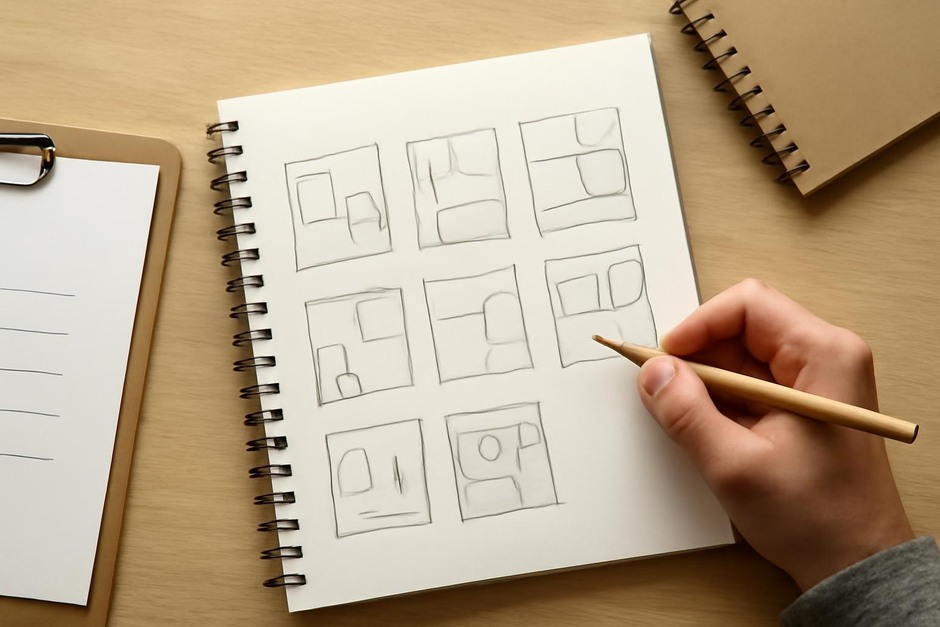
This routine is structured but flexible. It uses small thumbnails, a simple restriction per day, and a closing reflection. Materials can be minimal: sketchbook and a single drawing tool.
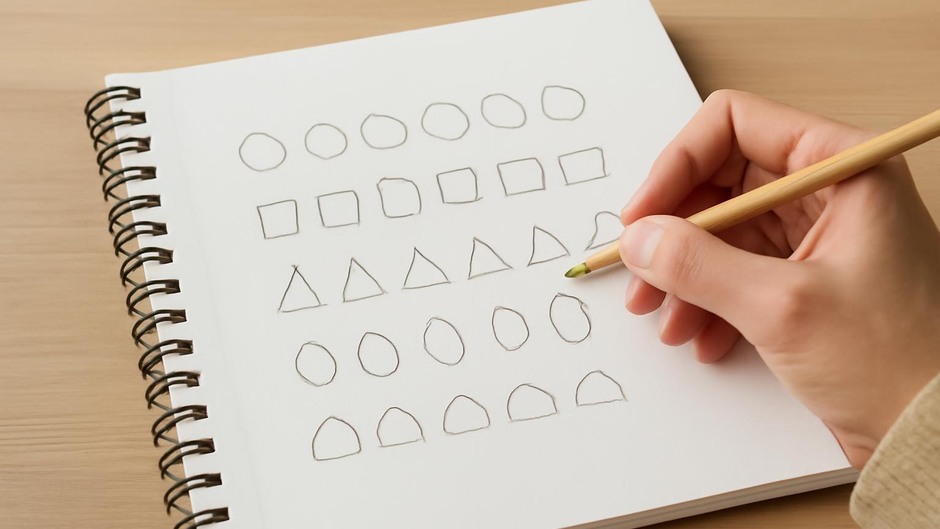
- Warm-up (2 minutes): Draw three quick, single-shape thumbnails. Focus on clarity of form rather than placement.
- Main set (6 minutes): Create six thumbnails. Choose a daily focus from shape, rhythm, balance, silhouette, or value. Limit each thumbnail to one intentional decision related to that focus.
- Review and note (2 minutes): Quickly mark the two strongest thumbnails and write one sentence about what made them work.
Weekly rotation
Rotate the primary focus each day to build balanced skills across the topics over a week. For example:
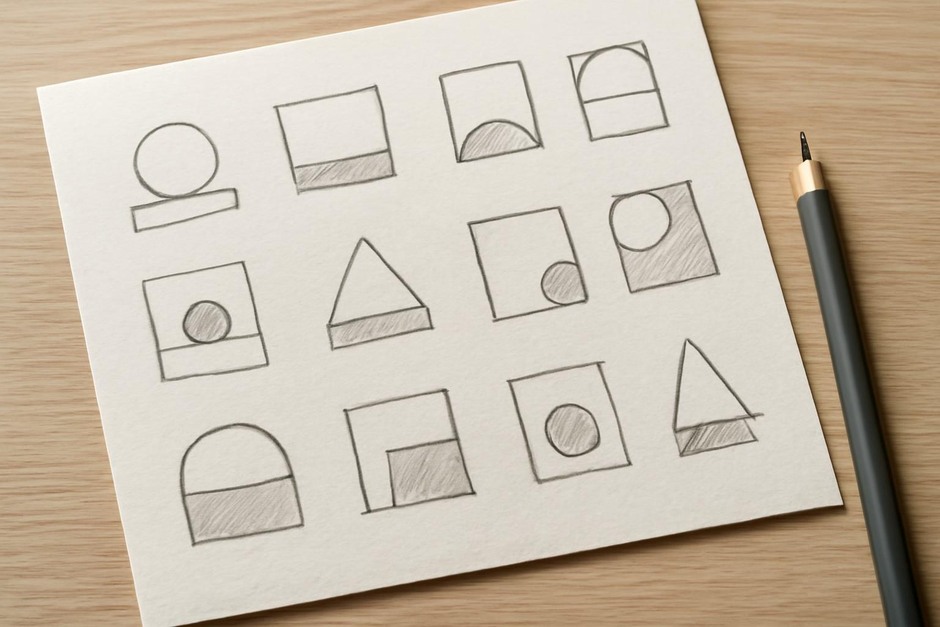
- Day 1: Shape vocabulary — reduce to simple forms.
- Day 2: Rhythm — repeat and vary spacing.
- Day 3: Balance — test asymmetry and counterweights.
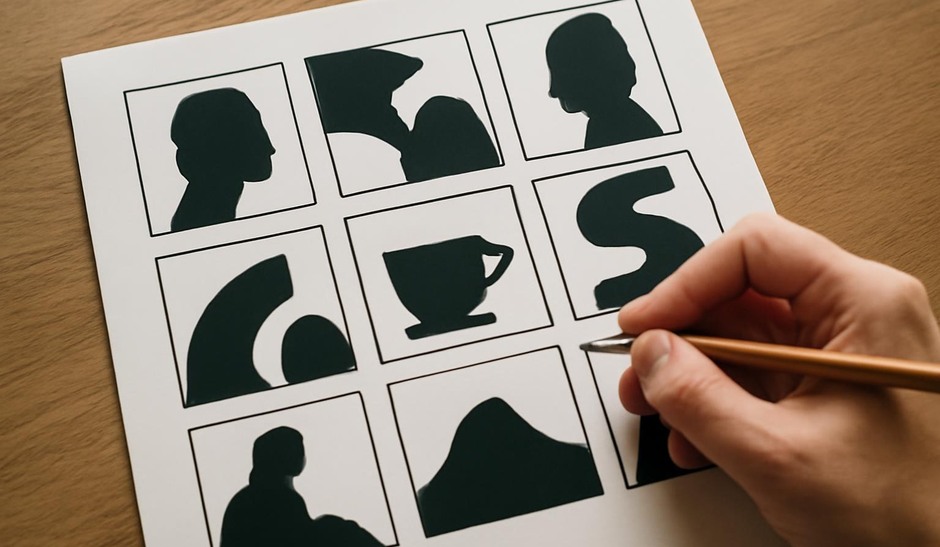
- Day 4: Silhouette and negative space.
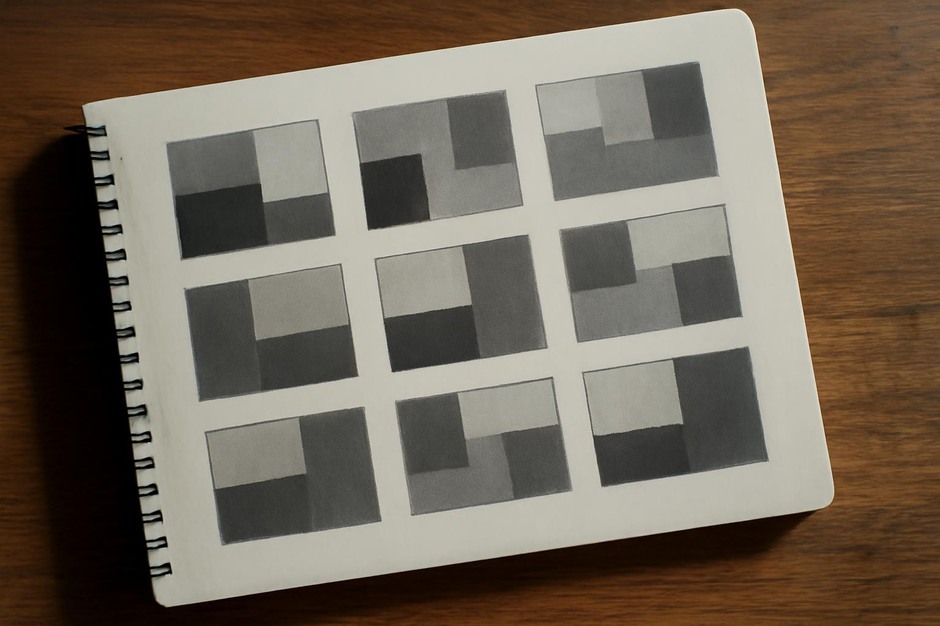
- Day 5: Value blocking with three tones.
- Days 6–7: Free play or revisit a favourite study.
Checklist
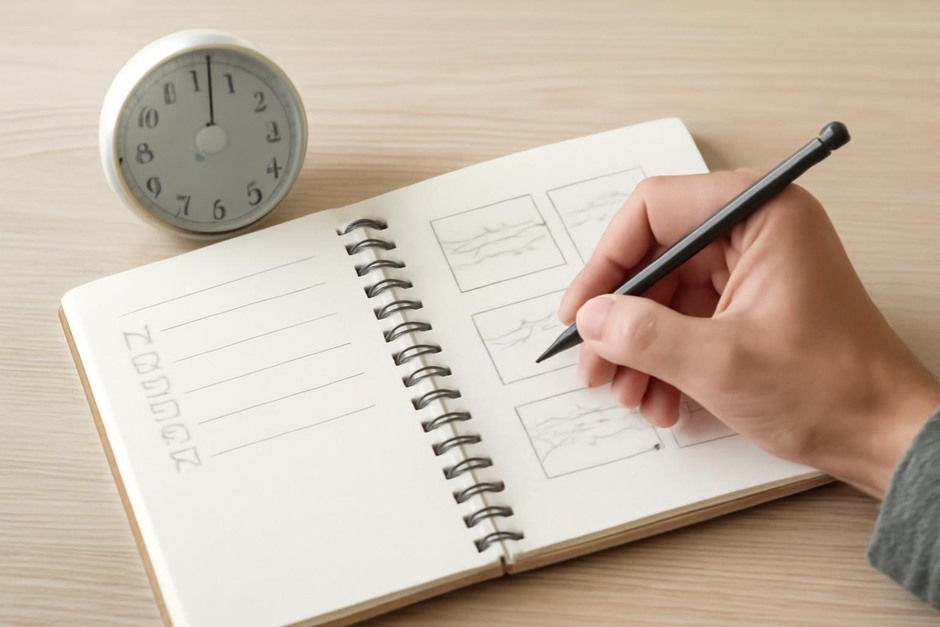
- Set a timer for 10 minutes.
- Warm up with 3 quick single-shape thumbnails.
- Create 6 focused thumbnails on the day’s topic.
- Mark the two strongest thumbnails and note why.
- Keep a simple log of one sentence per session.
Reflection prompts
- What consistent choice did you make that improved several thumbnails?
- Did the daily focus make a specific aspect clearer to you?
- Which thumbnail would you expand into a larger sketch and why?
- How did your hand and eye coordination feel compared to the previous day?
Consistency builds sensitivity. Over weeks, small adjustments compound into stronger visual judgement. This ten-minute routine is designed to be kind to a busy life while keeping your observational and compositional muscles active. The most important part is repetition: simple, short thumbnails done regularly become a reliable resource for larger decisions and deeper work.