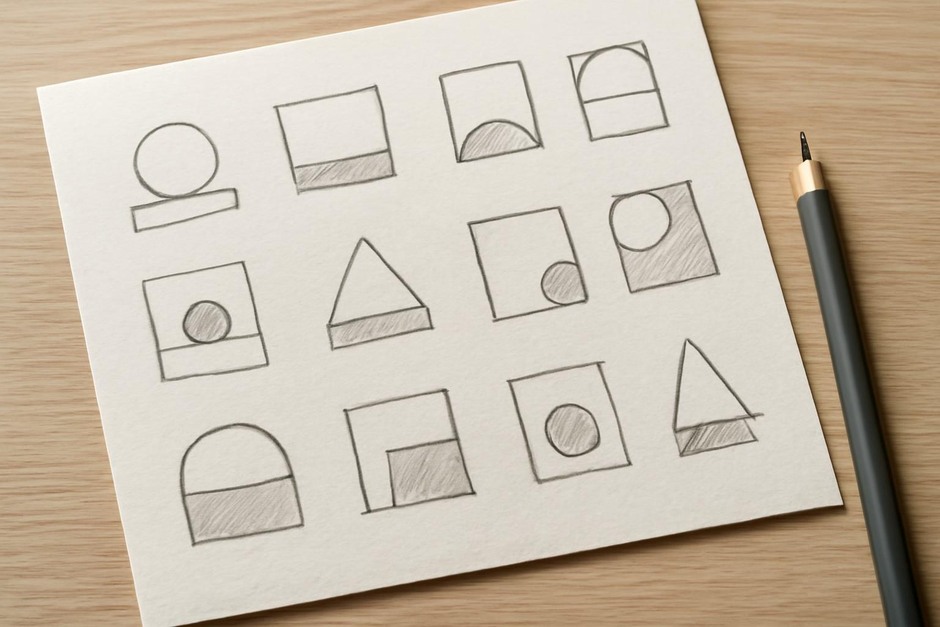
Thumbnail Shapes: A Small Vocabulary for Composition
Why a shape vocabulary matters
When working small, clarity matters more than refinement. A limited visual vocabulary helps you make quick compositional choices. Rather than attempting a finished drawing, you reduce decisions to repeating, varying, and combining a few reliable shapes. This creates readable compositions and trains your eye to recognise structural relationships.
Core shapes to begin with
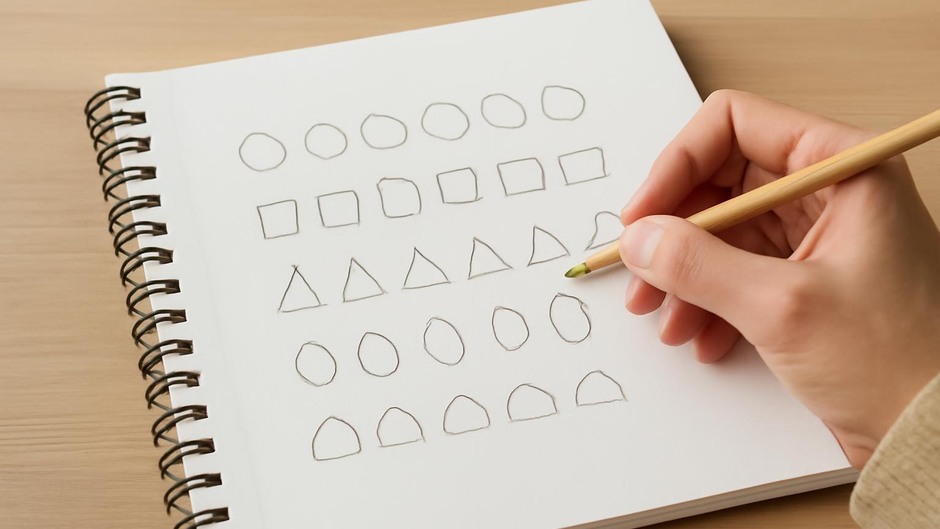
Start with a handful of shapes that are easy to draw quickly and that read clearly at thumbnail scale. Each shape suggests different character and spatial behaviour.
- Circle / oval — stable, central, friendly. Good for focal points and soft forms.
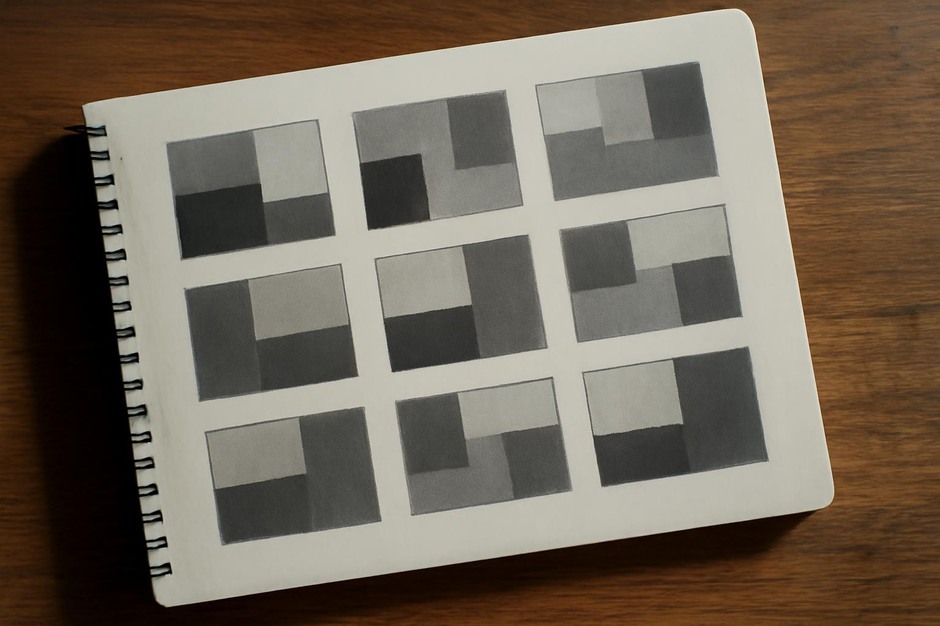
- Square / rectangle — solid, stable, architectural. Useful for grounding elements and screens of value.
- Triangle — directional and dynamic. Triangles can point, create tension, and lead the eye.
- Curve / S-curve — flowing movement, rhythm. Curves connect elements and create a sense of motion.
- Irregular organic blob — natural, informal. Good for foliage, masses, or ambiguous forms.
Combining shapes
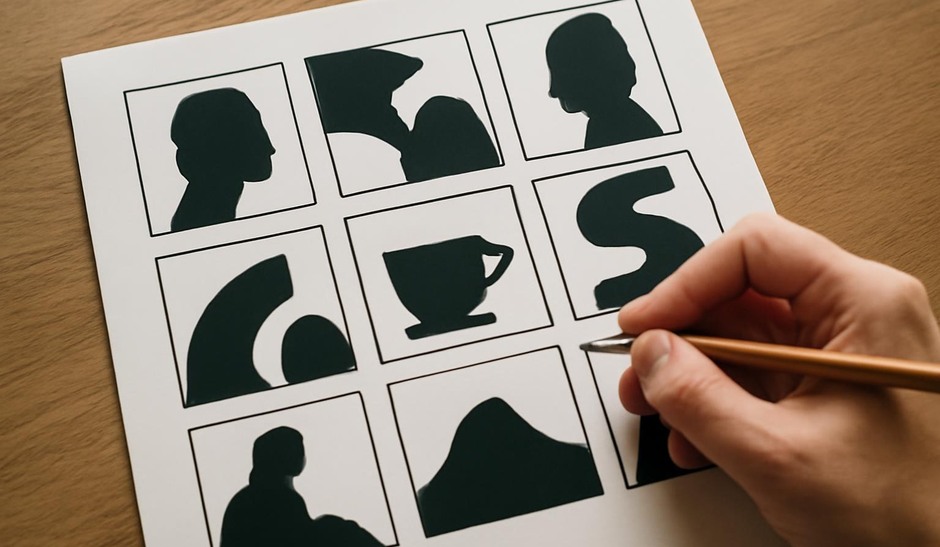
Compositions become interesting when shapes interact. Use contrasts in scale, edge quality, and orientation to create relationships. For example, pair a large soft oval with several small sharp triangles to balance calm and activity. Place a strong rectangle against a flowing curve to emphasise a border or pathway.
Small exercise: 30 thumbnails in 30 minutes
Materials: any sketchbook, pencil or pen, and a timer. The goal is speed and variation, not detail.
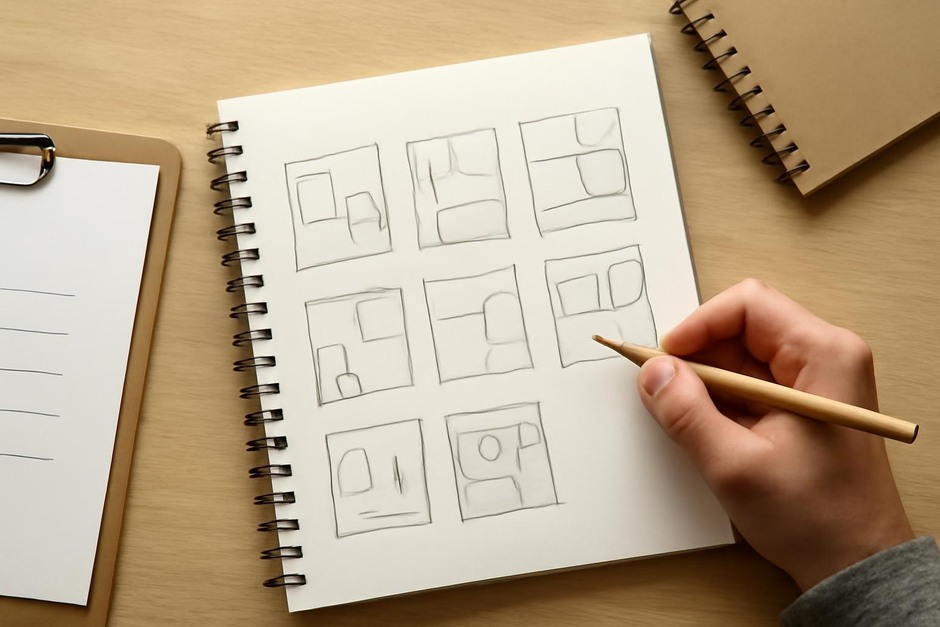
- Set a timer for 30 minutes and prepare a double spread or several small rectangles on a page.
- For each thumbnail, choose 1–3 core shapes from the list above.
- Compose them at different scales and positions. Limit yourself to the chosen shapes and a single value if you like.
- Allow no more than 1 minute per thumbnail. Keep marks light and decisive.
Checklist
- Choose 3–5 basic shapes to practise.
- Limit thumbnails to one or two clear shapes each.
- Vary scale, rotation, and proximity.
- Use a timer to encourage quick decisions.
- Keep annotations brief: note which arrangement feels strong.
Reflection prompts
- Which three shapes did you reach for most? Why?
- Where did contrast in scale or edge quality help clarity?
- Which thumbnails read clearly at a glance and which were confusing?
- What small adjustment (shift, scale change, rotate) improved a composition?
Repeating this exercise over days develops a compact, practical shape vocabulary you can draw on when planning larger work. Over time, you will notice certain combinations that reliably convey balance, motion, or emphasis. The aim is not to limit creativity but to sharpen the tools you use when making fast, formative choices in the sketchbook.