Negative Space and Silhouette Thumbnails
Why silhouettes matter
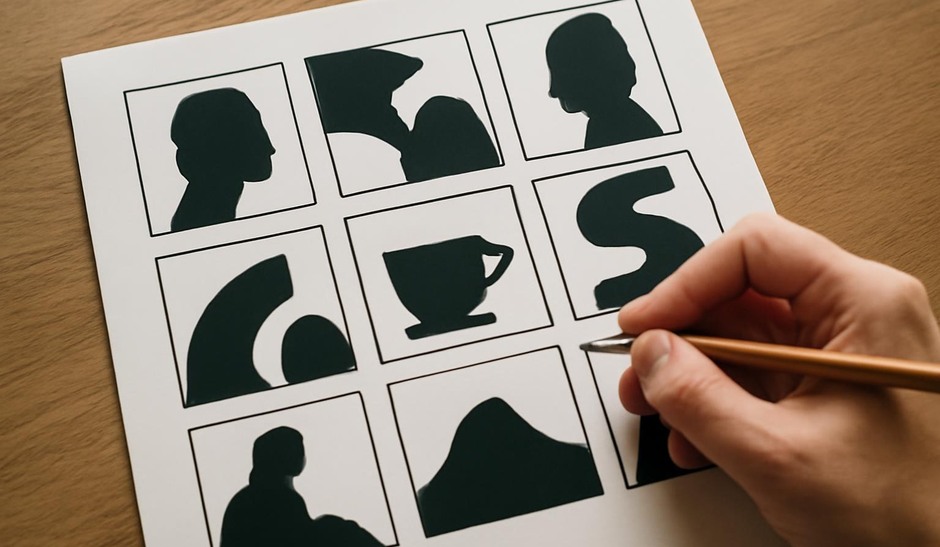
A strong silhouette communicates a concept instantly. When your thumbnail reads as a clear silhouette, it is likely to function at larger scales. Negative space defines edges and relationships as much as positive shapes. Training yourself to see both is a cornerstone of confident composition work.
Simplification strategy
Reduce objects to their outer edges first. Ignore internal detail and treat complex clusters as single masses. This helps you judge the overall rhythm, balance, and clarity of a composition without being distracted by surface texture.
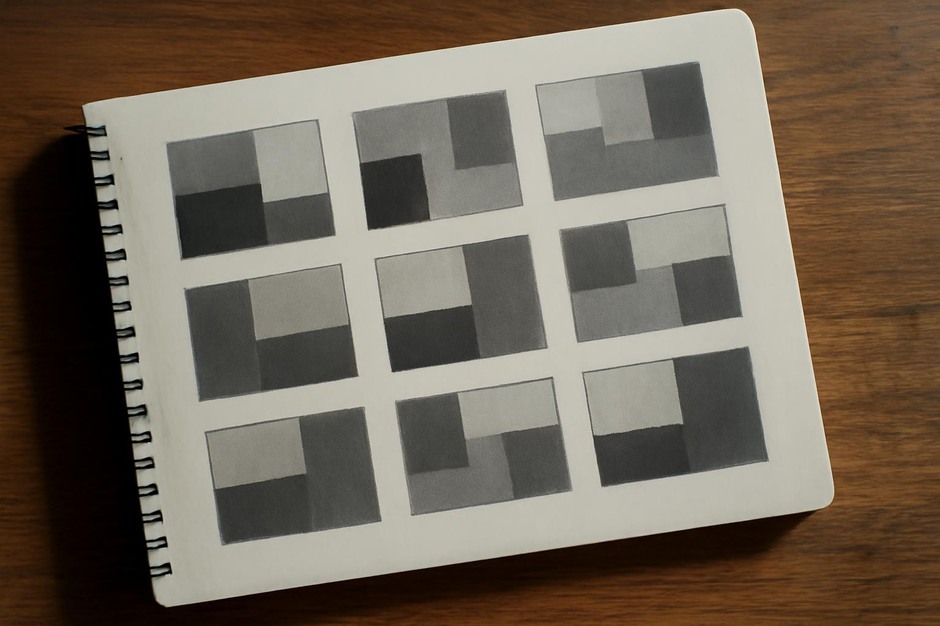
- Block in the silhouette — fill a shape solidly to test readability.
- Invert values — try both positive and negative silhouettes to see which reading is stronger.
- Watch for ambiguous edges — shapes that merge unintentionally can confuse the eye.
- Emphasise contour — a distinctive contour can carry a composition even when other data is minimal.
Silhouette thumbnail exercise
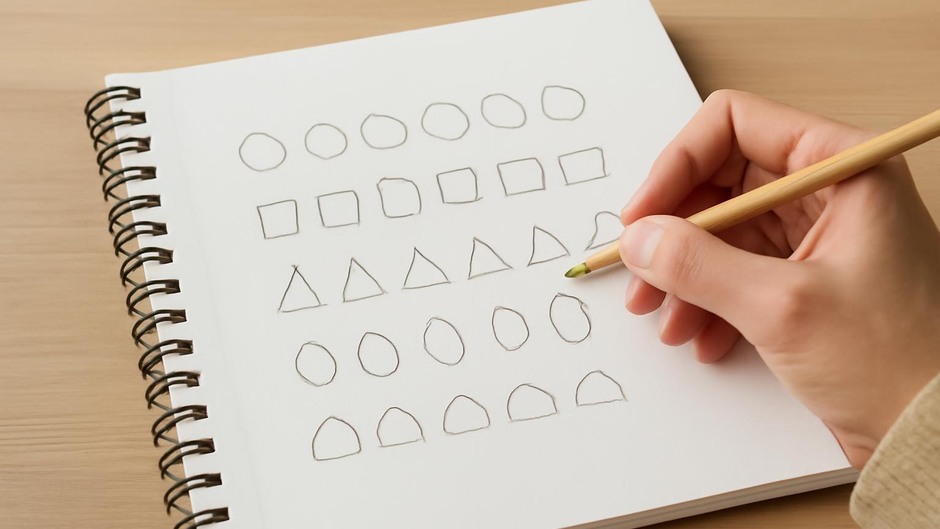
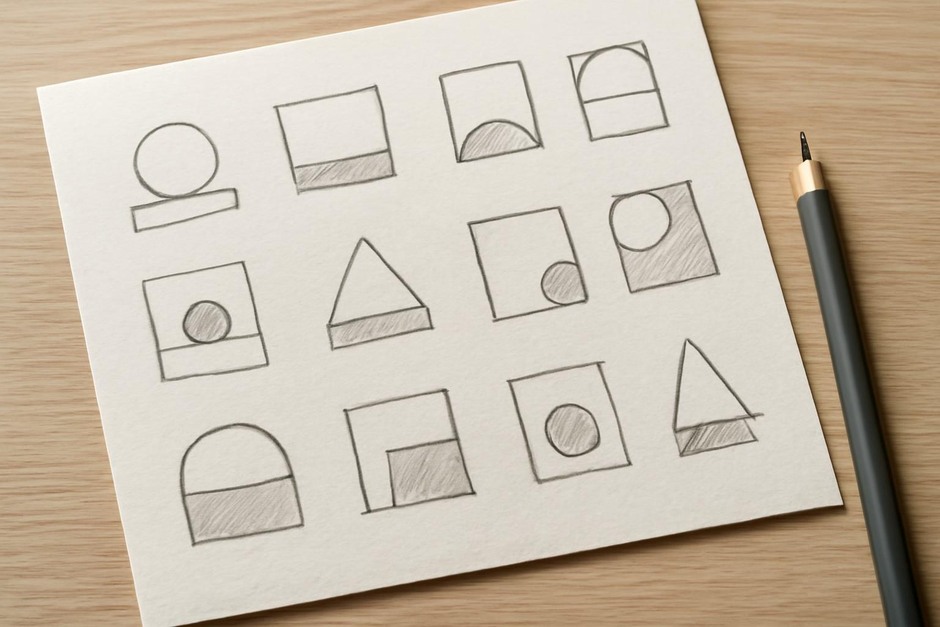
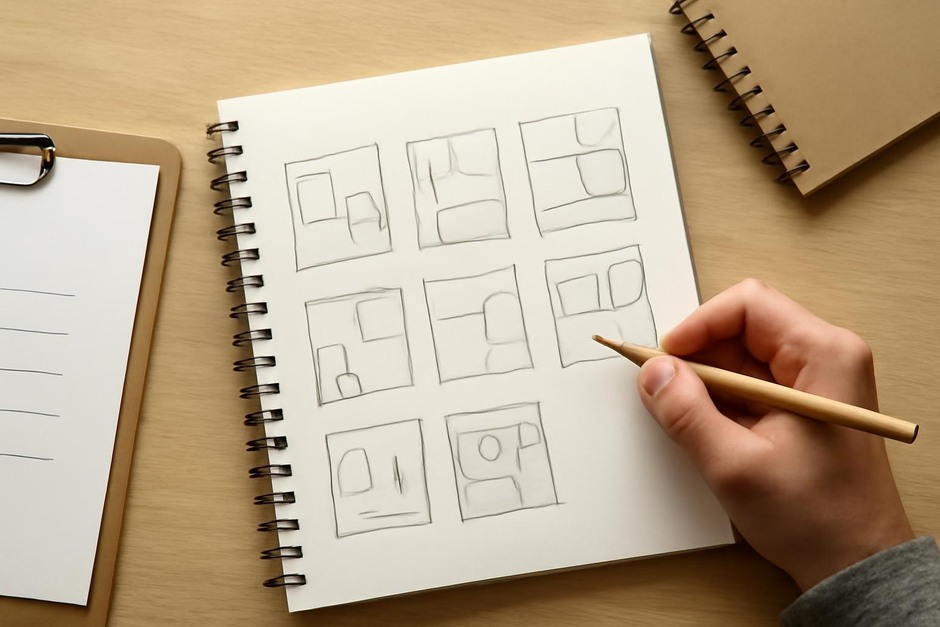
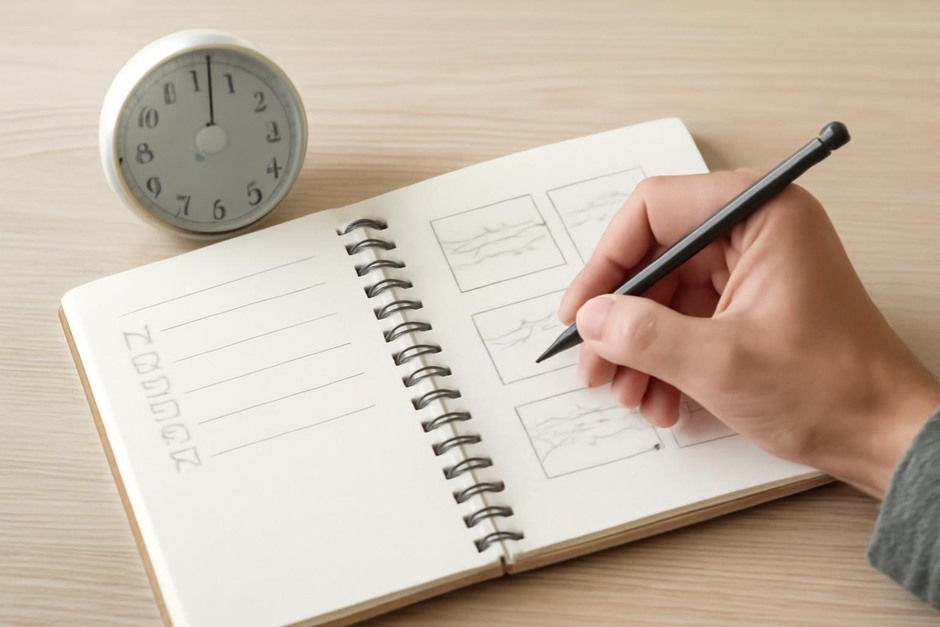
Materials: sketchbook, marker or dark pencil. Draw twelve thumbnail boxes and alternate between positive and negative studies.
- In the first set of six, block in a single strong silhouette. Vary scale and placement.
- In the next set of six, create compositions where negative space becomes the primary shape. Let the empty area define the subject.
- Compare which thumbnails read more strongly at a glance.
Checklist
- Work with solid filled shapes, not outlines.
- Alternate between positive and negative emphasis.
- Check edge clarity: avoid accidental mergers.
- Vary scale, placement, and orientation.
- Mark ones that communicate clearly without detail.
Reflection prompts
- Which silhouettes were recognisable immediately and which needed closer inspection?
- Did negative-space compositions create unexpected focal points?
- How did changing the scale of a silhouette affect its presence?
- Which thumbnail could be used as a logo-like symbol and why?
Working with silhouettes and negative space strengthens your ability to simplify complex scenes into effective visual statements. These thumbnail habits help you test clarity quickly and free you to explore composition with confident reductions rather than elaborate drafts.