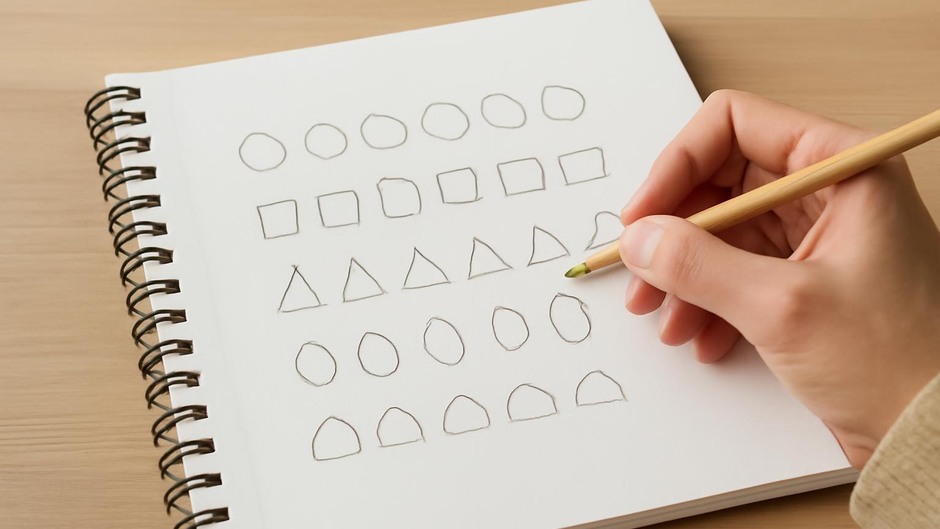
Rhythm and Repetition: Small-Scale Exercises for Flow
Understanding visual rhythm
Rhythm in visual composition is similar to rhythm in music: it is the pattern and pacing of elements that give a piece momentum and mood. On a small thumbnail scale, rhythm is created by repeating shapes, adjusting spacing, and varying scale. Practising rhythm trains you to control how the eye moves across a page.
Basic rhythmic devices
These simple techniques are useful in thumbnail work. Try them individually and in combination.
- Even repetition — identical shapes at regular intervals create a steady beat.
- Accelerating sequence — shapes that increase or decrease in scale establish a sense of movement.
- Alternation — two contrasting shapes placed in a repeating pattern produce a visual back-and-forth.
- Spacing changes — varying gaps between elements alters the perceived tempo.
- Rhythmic overlap — overlapping repeated shapes create density and a layered rhythm.
Thumbnail sequence exercise
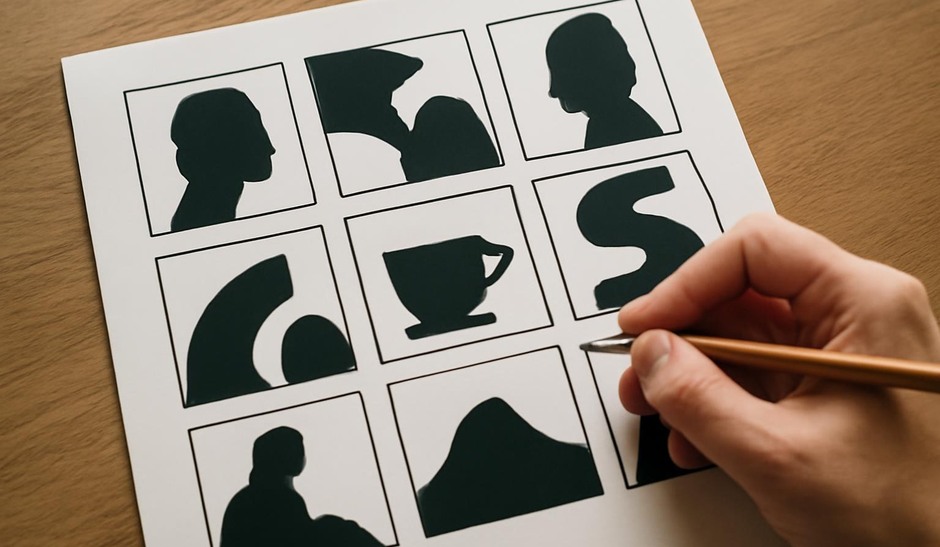
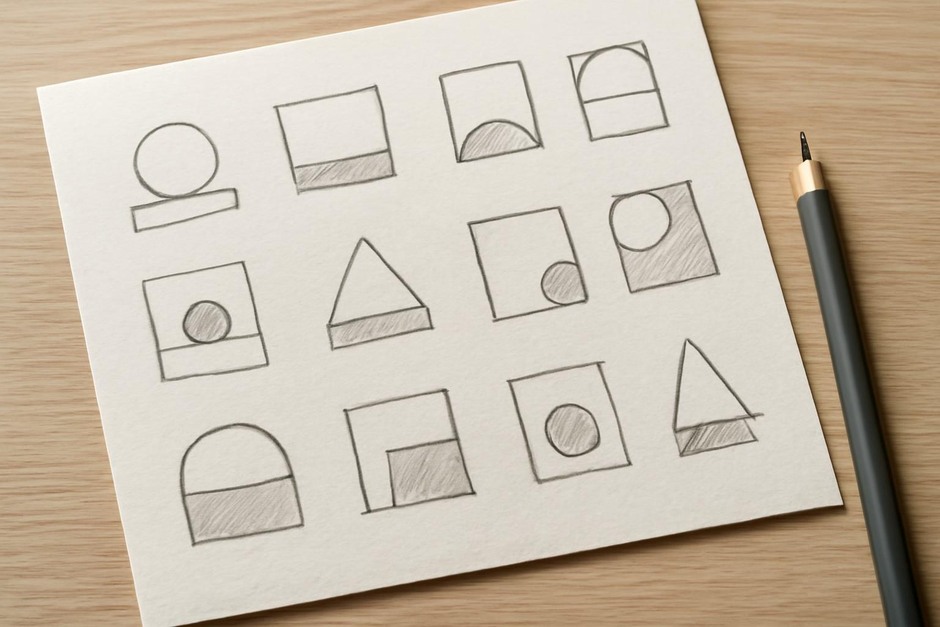
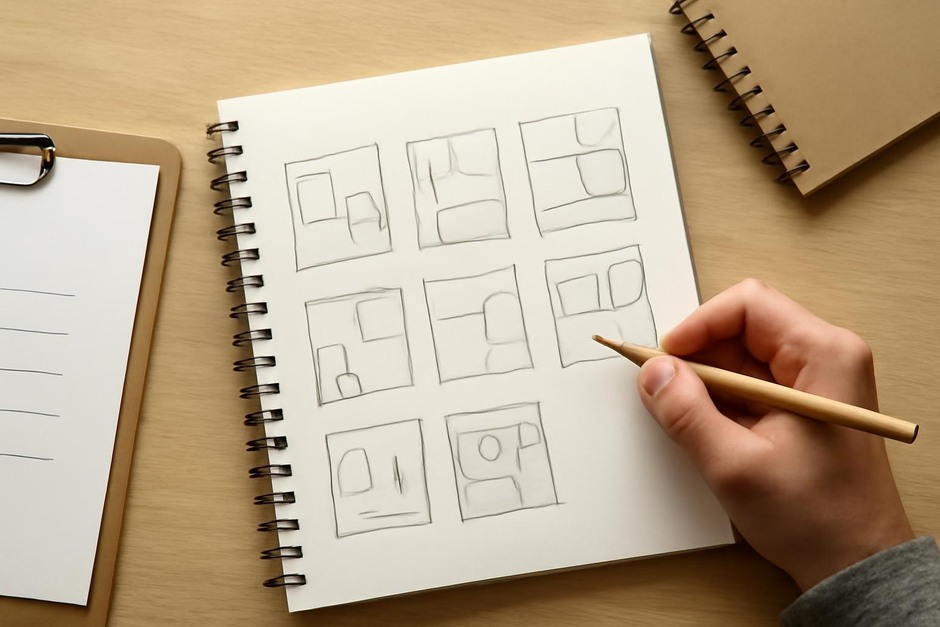
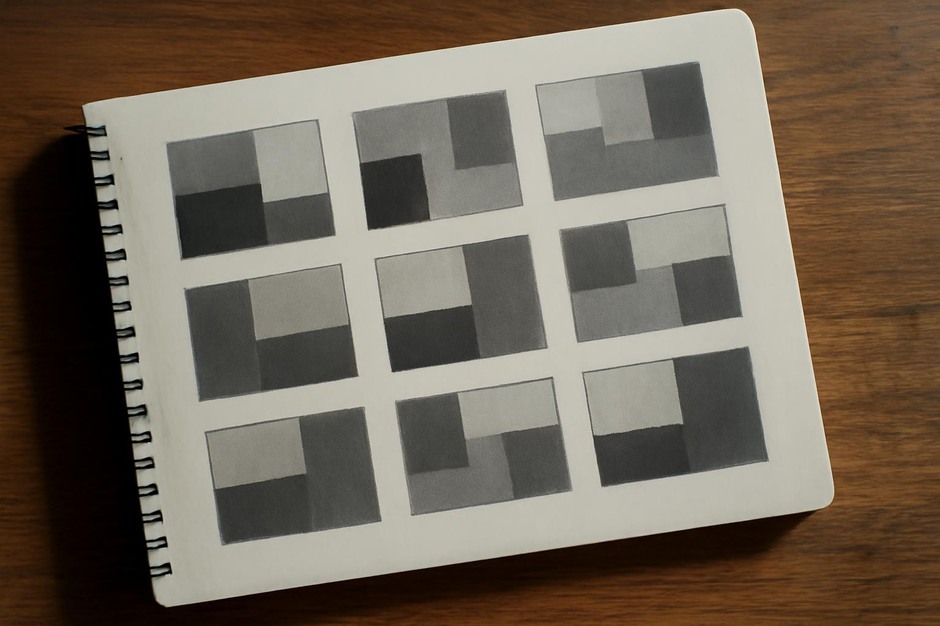
Materials: sketchbook and pencil. Prepare a column of small boxes approximately thumbnail size, or draw rows of small rectangles on a page.
- Create a set of 12 consecutive thumbnails.
- Start with simple even repetition in the first 3 thumbnails: same shape, same interval.
- In the next 3, change the spacing to narrow gaps, creating a faster visual tempo.
- Use the following 3 to accelerate or decelerate the scale of shapes.
- Finish with 3 thumbnails that combine alternation and overlap to create a staggered rhythm.
Checklist
- Prepare 12 small thumbnail boxes or marks.
- Decide which core shape will repeat (circle, rectangle, triangle, blob).
- Vary one parameter at a time: spacing, scale, overlap.
- Draw quickly; focus on pattern rather than detail.
- Mark thumbnails that feel balanced or lively for review.
Reflection prompts
- Which parameter change had the most immediate effect on tempo?
- Did even repetition feel calming or static in your thumbnails?
- Where did alternation create a pleasing interaction between shapes?
- Which thumbnail could be enlarged into a stronger composition and why?
Working with rhythm in thumbnails is a practical way to test visual pacing before committing to larger work. The small scale encourages risk-free experimentation, and repeated short sequences build a sense for how spacing and repetition shape the viewer’s experience.