Balancing Asymmetry: Confident Layouts from Small Thumbnails
What asymmetrical balance is
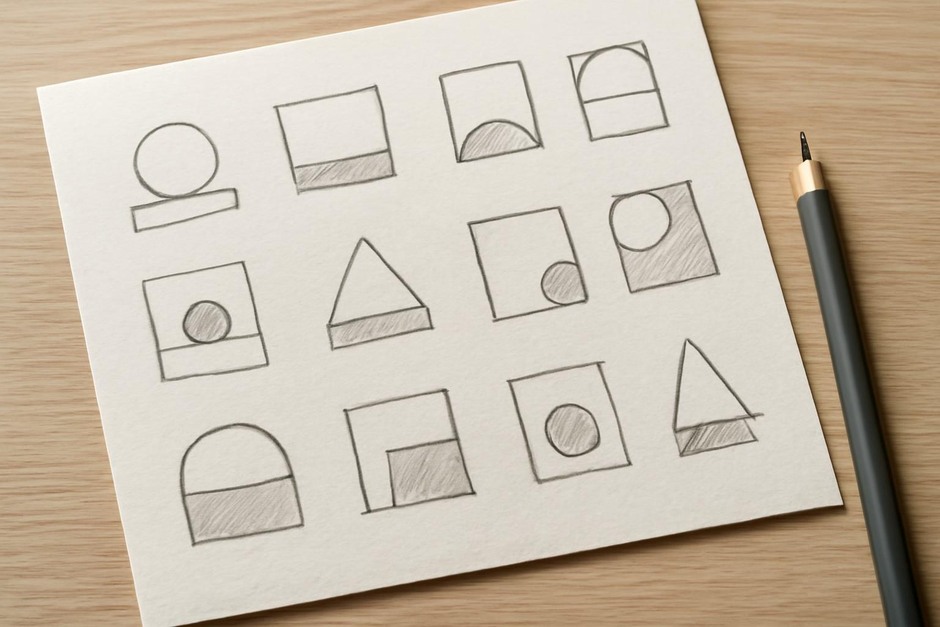
Balance is not limited to mirroring. Asymmetrical balance arranges different elements so that the composition feels stable despite unequal weights. On a thumbnail scale, this is a useful way to create dynamism without losing coherence. Learning to balance unequal elements trains you to see relationships in terms of counterweight and visual tension.
Concepts to notice
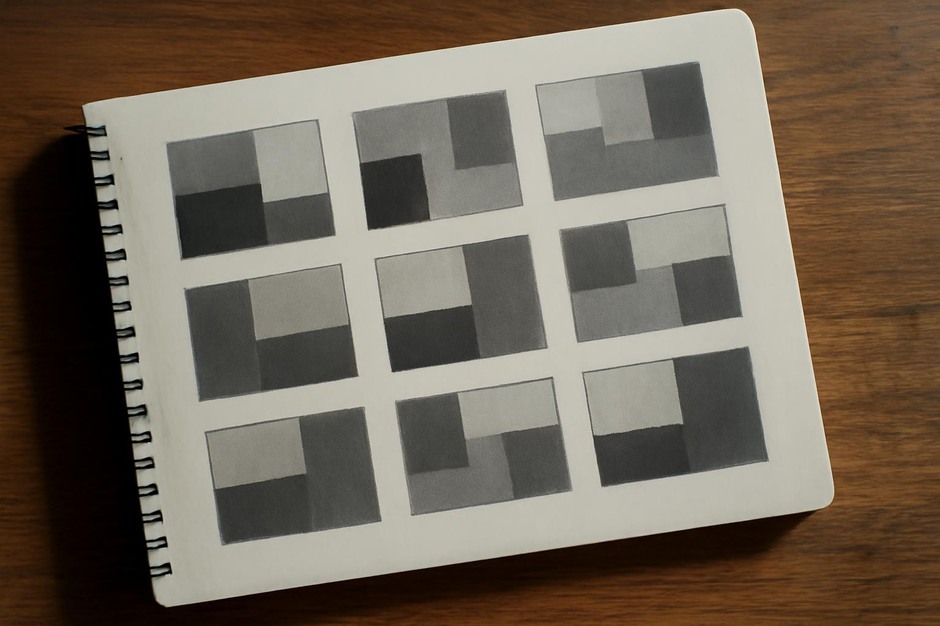
Think of each element’s visual weight, which depends on scale, darkness, complexity, and position. A small dark shape near the edge can balance a larger light shape near the center. Understanding these parameters helps you compose confidently with asymmetry.
- Visual weight — size, value, and density increase perceived weight.
- Counterweight — opposite or distant elements neutralise visual pull.
- Axis of balance — an implied line where elements pivot around one another.
- Negative space — empty areas can act as weight when shaped intentionally.
Five-minute balancing drills
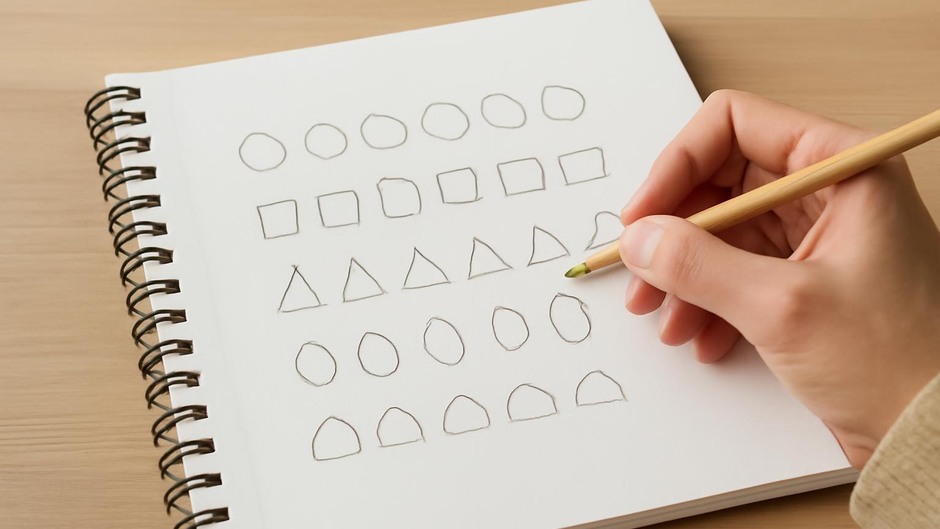
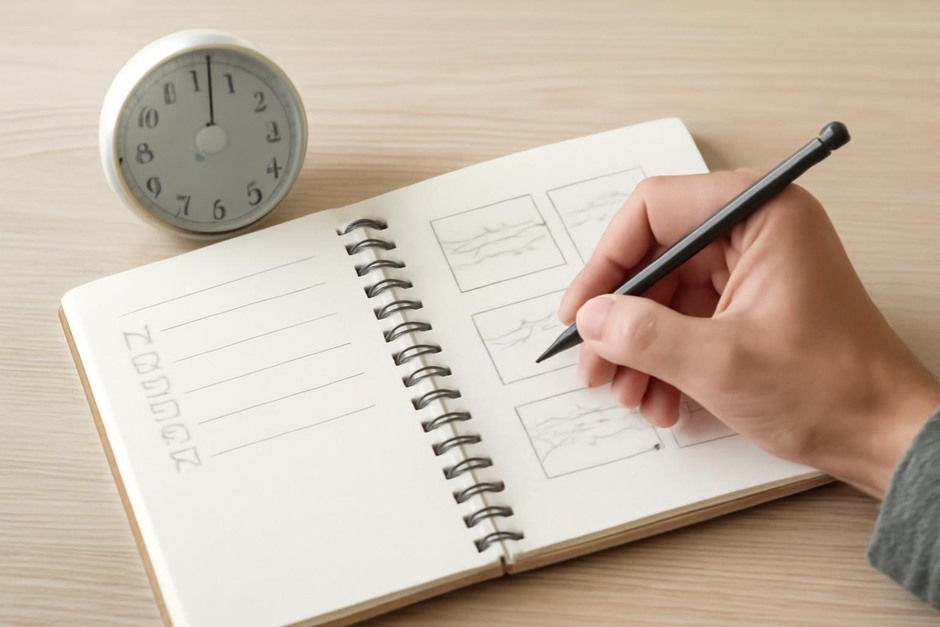
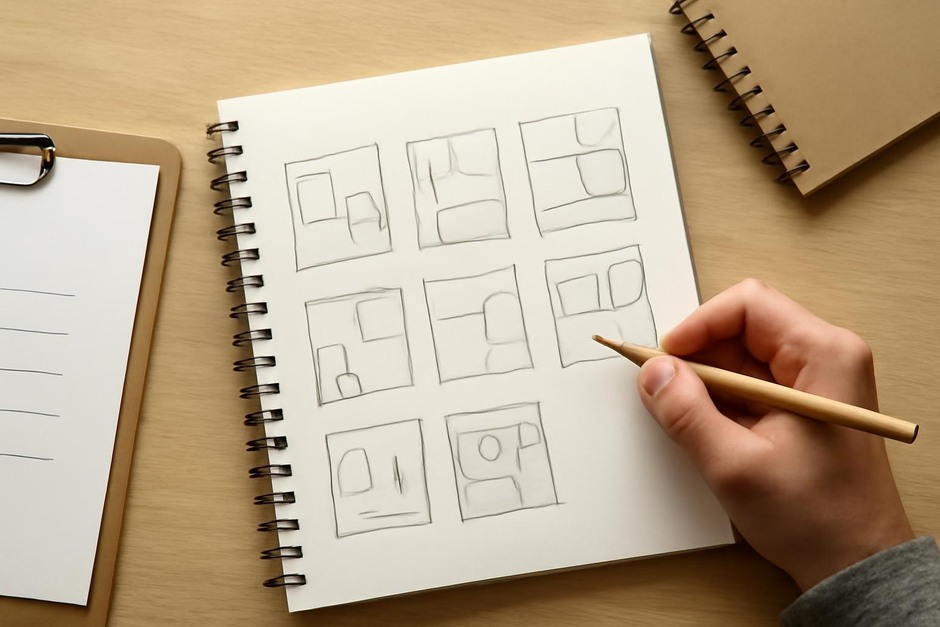
Materials: sketchbook, pencil. Draw a grid of small thumbnails—six to eight on a page. Spend one to two minutes per thumbnail, quickly testing different arrangements.
- Place a single dominant shape in the top left; try to balance with smaller elements elsewhere.
- Use a dark small mark near the bottom right to counter a large light mass in the center.
- Create a diagonal counterbalance: place interest along a diagonal axis, varying distance and scale.
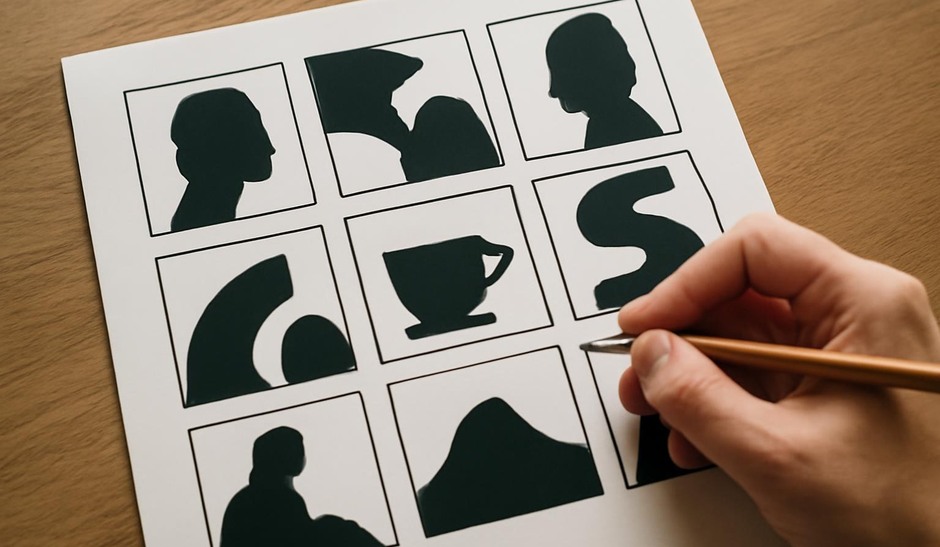
- Experiment with negative space as a balancing device: an empty wedge or corridor can offset a dense cluster.
- Try a composition where several small shapes collectively balance one medium shape.
Checklist
- Identify the main visual weight in each thumbnail.
- Test at least two counterweights for each dominant shape.
- Vary position relative to the page edge and axis lines.
- Use negative space intentionally as a balancing element.
- Note which thumbnails feel stable and which feel unresolved.
Reflection prompts
- What was the smallest mark that successfully balanced a larger shape?
- Where did shifting an element closer to the center change the perceived strength of a composition?
- Which thumbnails used negative space effectively as a counterweight?
- What pattern of placement produced the most pleasing tension for you?
Asymmetry is a subtle skill that benefits from repeated small experiments. By working quickly and noting responses, you develop a visual sense for how dissimilar elements can support one another. Over time, these thumbnail tests will make asymmetrical decisions feel deliberate rather than accidental.